Winter is coming: we're raising money for warm clothes for political prisoners
24.09.2026
Hello!
This is Ksenia Fadeeva from the Marathon in support of political prisoners “You are not alone”. We’re starting an appeal for warm clothes for political prisoners.
One of the first things that comes to mind when you talk about Russian prisons is the cold. Cold cells, icy punishment cells, and the colonies themselves, located in the northern Urals, in Siberia, beyond the Arctic Circle.
I’ve lived most of my life in Siberia, and there they say a Siberian isn’t someone who doesn’t feel the cold but someone who dresses warmly. A free person, even in the fiercest frost, can pick suitable clothes from their wardrobe, pour tea or coffee into a travel mug and go about their business. Or cancel everything and stay home under a blanket, cuddling the cat. Prisoners don’t belong to themselves.
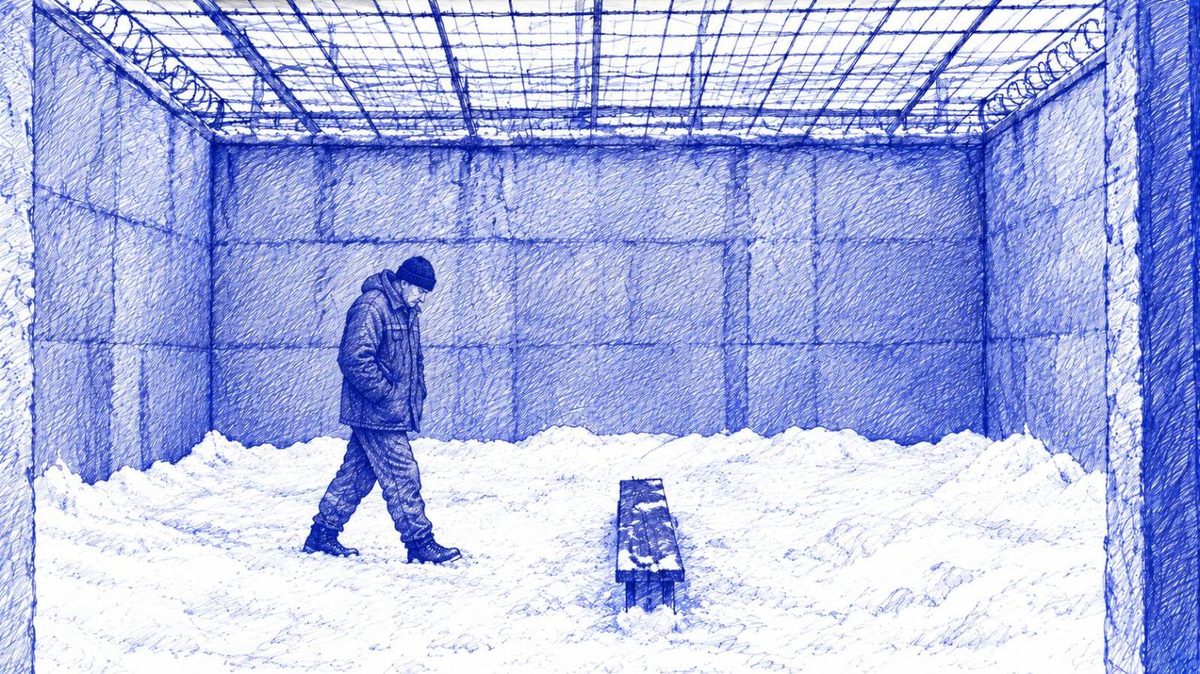
Those still in pre-trial detention, awaiting their sentence, have to travel to court in freezing prison vans and wait before hearings in special holding rooms, which in courts are often in the basement.
In pre-trial detention, every prisoner is entitled to an hour’s exercise outdoors. When I was in detention I went out in any weather, even at minus thirty, because it’s one of the few chances to stretch your legs and breathe fresh air.
The state doesn’t give clothes or shoes to people in pre-trial detention: they wear what they were arrested in or what their relatives have brought. If they have relatives, of course.
I’ve seen people who didn’t go out for exercise at all for months, because their only shoes were the summer canvas shoes without laces they were arrested in. But you’ll be taken to a court hearing or to the investigator regardless — whether or not you have suitable shoes is nobody’s concern.
In the colonies the clothing situation is different, but no better. Yes, there the state does issue a uniform. As you can easily guess, the uniform is cold and of terrible quality. Stiff, cold boots, thin gloves; women are given tights so one-size-fits-all you could pull them up to your ears, not that this makes them any warmer.
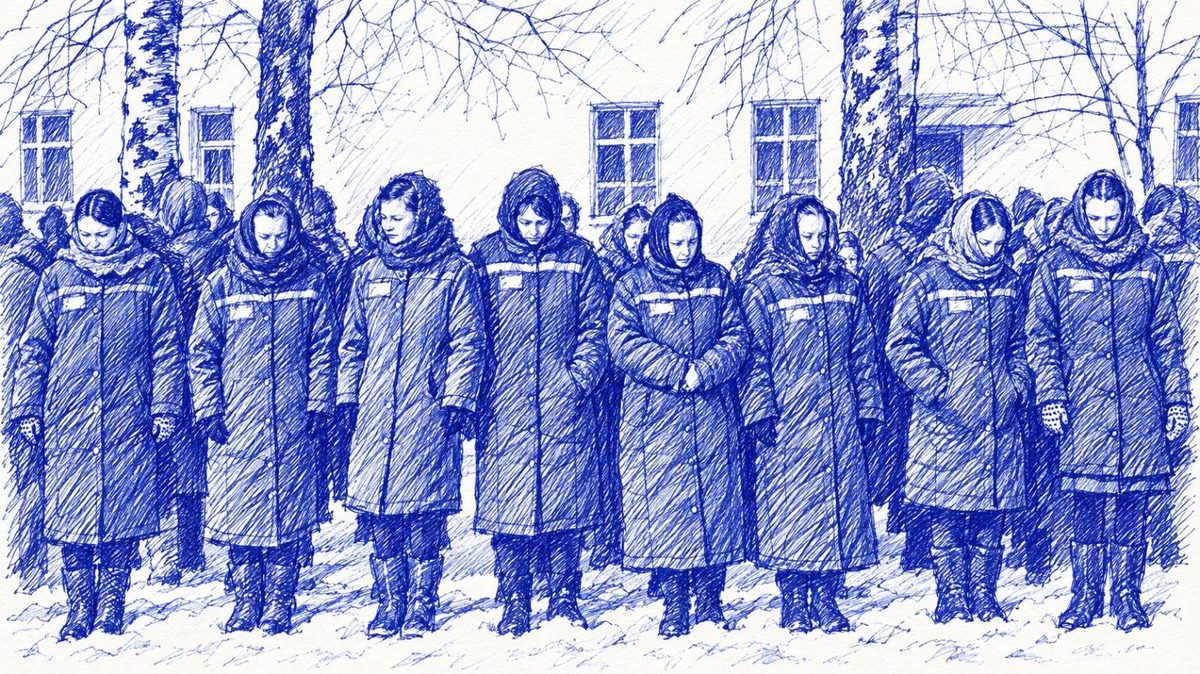
All prisoners in Russian colonies must work. Most work indoors, in sewing workshops, but they have to walk outside to get there.
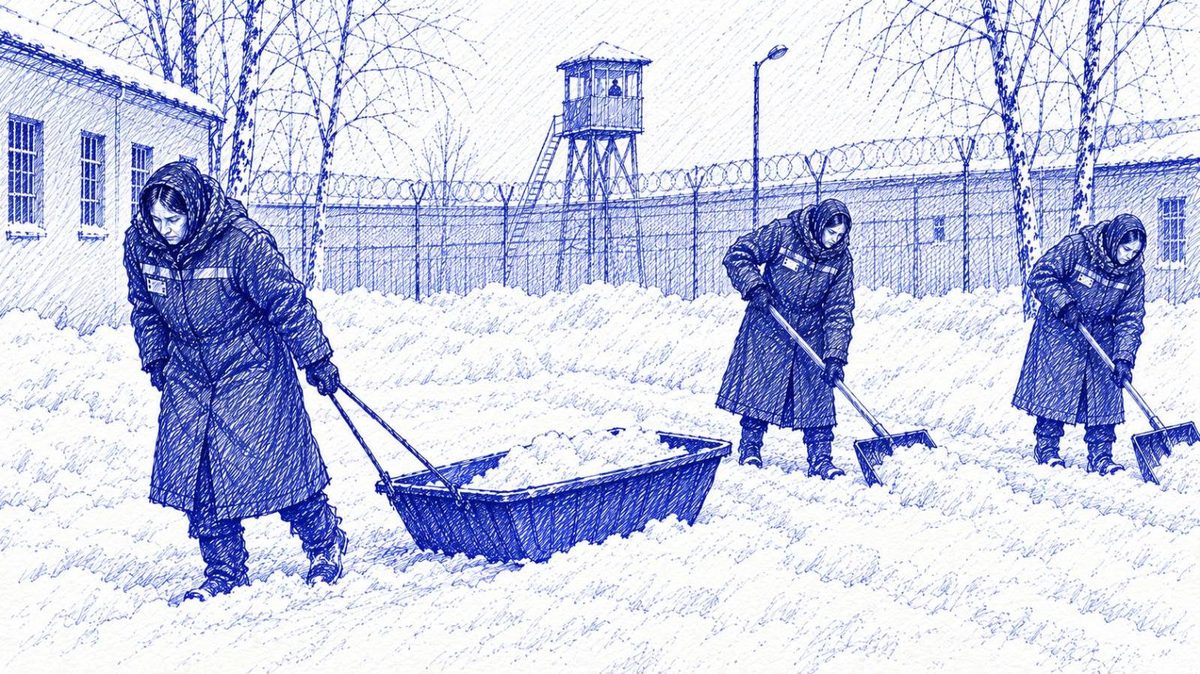
And besides their main work there are so-called “unpaid improvement works”. They often look like pure mockery: in summer, pulling grass by hand from the security strip and bailing out puddles with buckets after rain; in winter, endless snow clearing and knocking icicles off roofs. Prisoners not only shovel snow but also haul it on drag sledges (clumsy plastic tubs). In women’s colonies, women do all this themselves too. It’s hard, hellish work, and the cold makes it torture.
Do you know how women prisoners keep their uniform boots warm in winter? Instead of proper warm insoles, they put sanitary pads in them.
It’s September now, and by the beginning of October we want to raise at least €5,000 for warm clothes. Over the summer there were many politically motivated trials on terrorism, sabotage and treason charges. The sentences in these cases are 15–20 years in special-regime colonies. Including the notorious Kharp, where Alexei Navalny was killed. Prisoners are now starting to be transported to where they will serve their sentences, and we very much want to get clothes to them before the cold sets in.
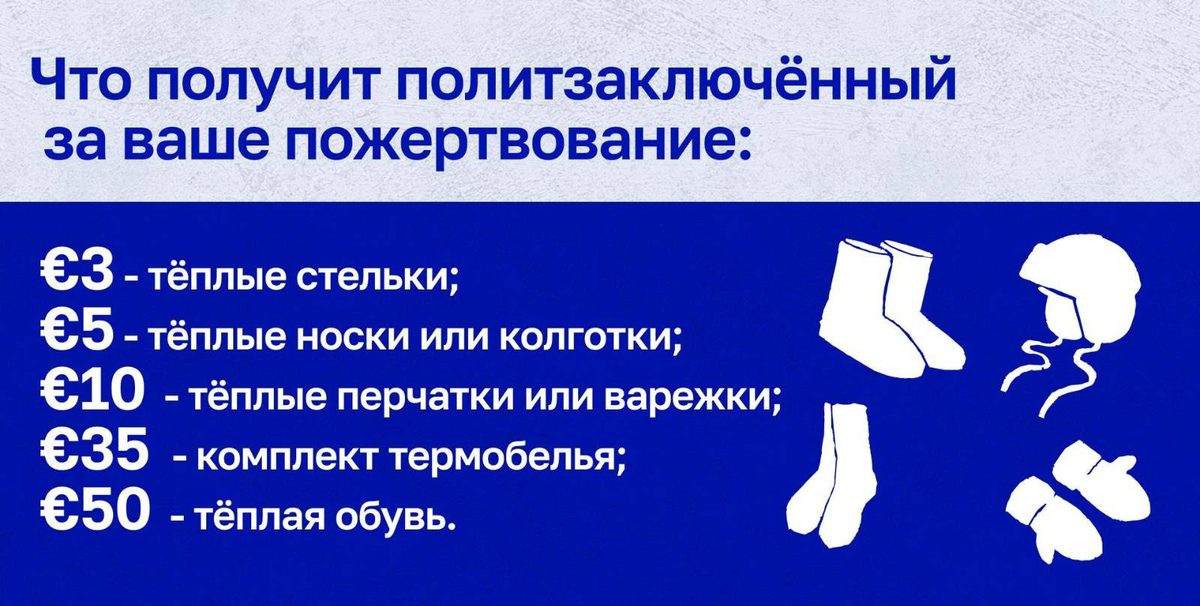
And, as always, I ask you to set up a recurring donation to the Marathon. Right now we’re raising money for warm clothes, but winter is ahead, and your recurring donation of even €3, €5 or €10 a month will let us top up a prisoner’s account, so they can buy tea, coffee and food to help them keep warm in the harshest frosts.
Let’s keep political prisoners warm together this winter!
Kind regards,
Ksenia Fadeeva